
Date: December 6, 2025 Byline: Tech Analysis Desk Auto Detailing Website Design
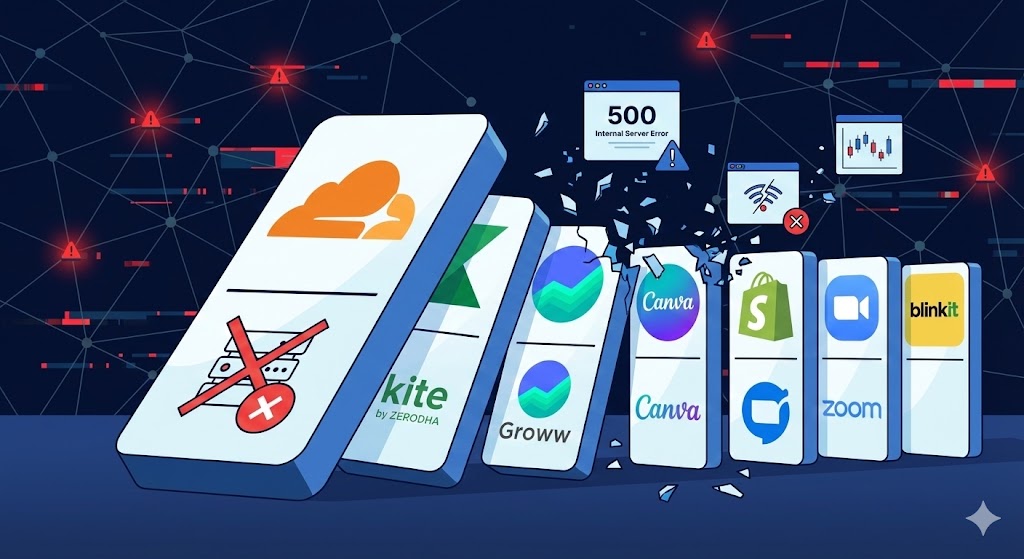
On December 5, 2025, a significant portion of the internet seemed to simultaneously grind to a halt. Stock traders in India found themselves unable to log into platforms like Zerodha and Groww during crucial market hours. Graphic designers saw their Canva projects freeze mid-edit, and shoppers on platforms like Blinkit and Shopify were unable to complete purchases.
A glance at the search trend data from that afternoon reveals a chaotic mix of keywords: “500 internal server error,” “Kite down,” “zoom outage,” and the unifying culprit, “Cloudflare.”
This trend breakdown is more than just a list of complaints; it is a digital footprint of a massive single-point-of-failure event, illustrating how dependent the modern web has become on a handful of infrastructure giants.
The Invisible Backbone of the Internet
To understand why unrelated companies like a stock broker, a design tool, and a grocery delivery service went offline together, one must understand the role of Cloudflare.
Cloudflare acts as a content delivery network (CDN) and a security shield for millions of websites globally, powering an estimated 20-25% of web traffic. It sits between a website’s server and the end-user, speeding up load times and protecting the site from malicious attacks like DDoS.
When Cloudflare experiences a significant internal issue—as it did on December 5th due to a technical fault—it acts as a roadblock. The apps themselves weren’t broken, but the “road” leading to them was completely impassable.
-
Read More: What is a Content Delivery Network (CDN)?
Decoding the Search Trends
The list of trending keywords provided a real-time look at widespread user panic.
The immediate spike in financial keywords like “Zerodha down” and “Groww server down today” highlighted the acute stress of traders unable to manage their positions [1]. Simultaneous searches for “Shopify down” and “Canva down” showed the global spread of the outage across productivity and e-commerce sectors.
Perhaps the most telling keyword was “500 internal server error cloudflare.” This specific error code is what Cloudflare displays when it cannot connect to the host website. Users seeing this generic white screen immediately turned to Google to diagnose why their favorite apps had suddenly failed.
A Fragile Interdependence
The incident serves as a stark reminder of the fragility inherent in the internet’s current architecture. While centralized services like Cloudflare provide immense benefits in terms of speed and security, they also create massive single points of failure.
The irony of the situation was best captured by another trending keyword in the list: “Downdetector.” The very website that millions of users visit to report internet outages also struggled to load because it, too, relies on Cloudflare’s infrastructure [2].
Cloudflare eventually resolved the issue, restoring access to the affected platforms later in the day. However, the event has reignited discussions among tech leaders about the need for better redundancy and decentralized alternatives to prevent future widespread blackouts.
Related Links:
-
[1] Economic Times: Trading apps Zerodha, Groww hit by global Cloudflare outage (Example link to financial news coverage)
-
[2] The Verge: Even Downdetector went down during the Cloudflare outage (Example link to tech news coverage)
-
Cloudflare System Status Page: Historical Uptime Data (Link to official status history)
-
Wired: Why the Internet Keeps Breaking All at Once (Example link to broader analysis of internet fragility)
-
TechCrunch: Major platforms including Canva and Shopify recover following outage (Example link to post-outage reporting)